Creating a Food Forest in Perth’s Northern Suburbs
Building a Food Forest in Perth's Northern Suburbs - Warm Temperate Zone 5
From Nannup to Your Backyard: Creating a Food Forest in Perth’s Northern Suburbs
The recent Nannup Flower and Garden Festival was a whirlwind of inspiration and connection. Running workshops on worm farms and slow gardening allowed me to meet passionate gardeners eager to transform their green spaces. One particular conversation with a fellow gardening enthusiast sparked an idea for this blog post.
This gentleman, a Perthian with a growing interest in food forests, was seeking guidance on how to transform his existing orchard into a thriving, productive ecosystem. His orchard, a mix of three-year-old fruit trees spaced about two meters apart, was already a good start. However, he was eager to maximize its potential by incorporating more plants, particularly those that were drought-tolerant, beneficial to pollinators, and, most importantly, edible. His location in the northern suburbs of Perth, classified as zone 5 warm temperate and coastal, presents a unique set of challenges and opportunities.
Let’s dive into the world of food forests and explore how to transform this existing orchard into a bountiful ecosystem.
Understanding Food Forests
A food forest is a diverse ecosystem designed to mimic the structure and function of a natural forest. It's a multi-layered system where plants work together to create a self-sustaining environment. Unlike traditional monoculture gardens, food forests aim to produce a variety of food, fuel, and fibre year-round. These generally come in one of four major “styles” -
1) Silvopastural - think nice rows, fewer species, with wide spaces in-between for growing grass so animals can forage.
2) Orchard - woodland rows, more species, with smaller spaces in-between, but still growing grasses etc. to feed the system.
3) Mature woodland - more densely planted, trees and shrubs etc. end up touching, much smaller spaces in-between after establishment (as you no longer need to grow grasses to feed the system).
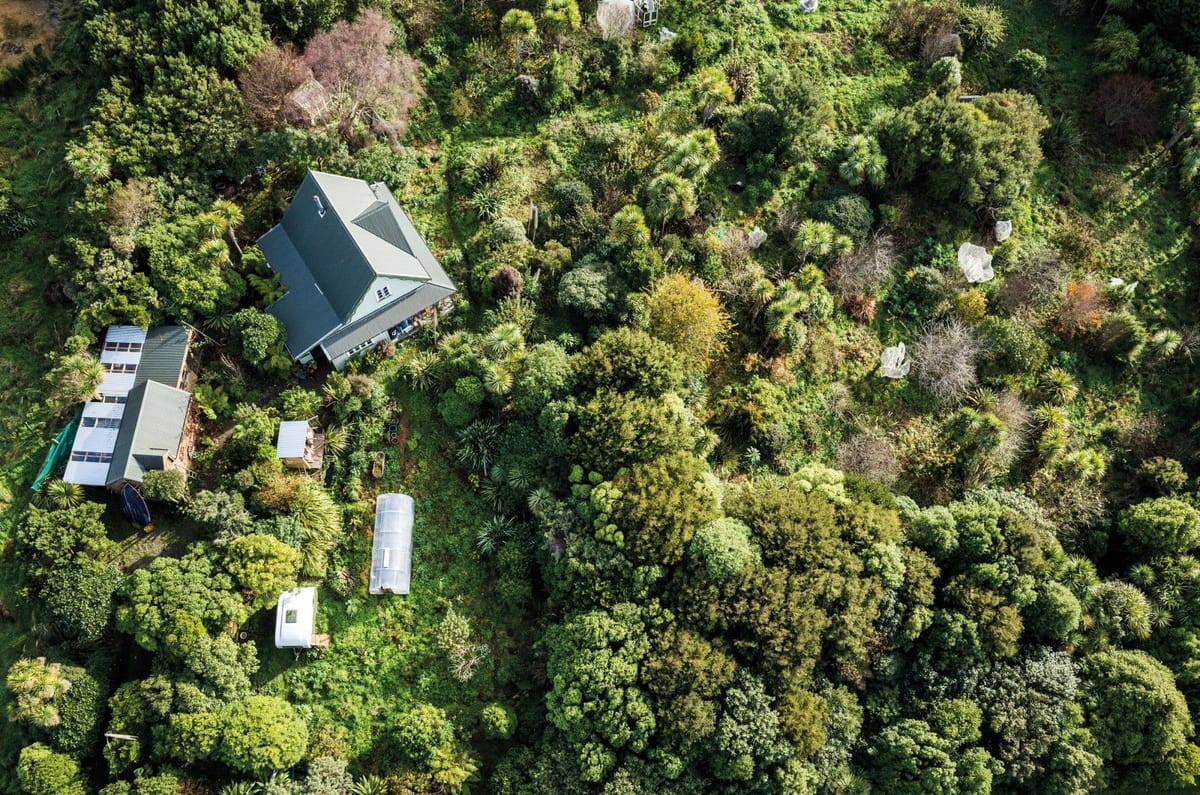
4) Forest - closed canopy, older trees, no space in-between (think of your local forest, with everything everywhere).
Number 2 is what most people start with, to end up at number 3 over time.
Basic Components of a Food Forest:
Canopy Layer: This is the top layer, typically consisting of mature fruit trees like apples, pears, and stone fruits.
Shrub Layer: This layer includes shrubs like berries, currants, and hazelnuts, providing additional food and habitat for wildlife.
Herb Layer: Aromatic and medicinal herbs thrive in this layer, attracting pollinators and offering culinary delights.
Groundcover Layer: Low-growing plants like strawberries, creeping herbs, and groundcovers protect the soil, suppress weeds, and provide additional food sources.
Vine Layer: Climbing plants like grapes, passionfruit, and climbing beans can utilise vertical space and increase productivity.
Root Layer: This layer includes plants like radish, carrots, Jerusalem artichoke and peanuts. Think things that grow under ground.
Transforming Your Orchard into a Food Forest
To transform your existing orchard into a food forest, consider the most simplistic way to get started:
Assess Your Space: Evaluate the layout of your fruit trees, soil conditions, sunlight exposure and water sources. This will help you determine the best locations for different plant layers.
Introduce Understory Plants: Start by planting shrubs, herbs, and groundcovers between your fruit trees. Choose drought-tolerant varieties suited to your climate.
Vertical Gardening: Utilise vertical space by incorporating climbing plants like beans, grapes, or passionfruit on trellises or arbours.
Consider Pollinators: Include plants that attract pollinators like bees, butterflies, and birds. This will enhance the productivity of your fruit trees and overall ecosystem health.
Mulch and Compost: Apply a thick layer of mulch to conserve moisture, suppress weeds, and improve soil health. Incorporate compost to enrich the soil and provide essential nutrients for your plants.
Plant Suggestions for a Perth Food Forest
Here are two potential planting schemes for your Perth food forest:
Scheme 1: The Mediterranean Medley
Canopy Layer: Existing fruit trees (e.g., apples, pears, figs)
Shrub Layer: Olives, rosemary, lavender, and native wattles.
Herb Layer: Thyme, oregano, sage, and mint.
Groundcover Layer: Creeping rosemary, strawberries, and garlic chives.
Vine Layer: Grapes, passionfruit, or climbing beans.
Scheme 2: The Edible Jungle
Canopy Layer: Existing fruit trees (e.g., apples, pears, figs)
Shrub Layer: Raspberries, blackberries, and native quandongs.
Herb Layer: Mint, parsley, chives, and lemon balm.
Groundcover Layer: Edible weeds like chickweed and dandelion, along with creeping herbs like thyme.
Vine Layer: Climbing beans, passionfruit, or native grape varieties.
Remember, this is just a starting point. Feel free to experiment with different plant combinations and adapt the design to your specific preferences and conditions.
But How? I Hear you Say
The where to plant can feel like a head-scratcher, but it’s actually a delightful puzzle to solve! Imagine treating your garden as a canvas where the goal isn’t to cram in a hundred different plants but to create a masterpiece with just a handful.
Focus on choosing 5-7 plant types (e.g. herbs & shrub berries etc.), then 15-20 species within those types (e.g. rosemary & blueberry etc.) that harmoniously fit within your 1.5 meter space. This not only simplifies your planting strategy but also allows you to create diverse micro-environments, attracting beneficial critters while keeping maintenance manageable while you observe how this selection works.
Once you’ve established your perfect plant combo, just replicate this arrangement across the 10 meters or more. Before you know it, those patches of green will meld into a vibrant tapestry, teeming with life and productivity. Embrace the beauty of repetition, and your garden will reward you with a flourishing, resilient ecosystem! Start with a slow and small solution and work your way up from there. You can plant in rows, or in guilds like the example below.
The following is an example list of plants that may be suitable for a drought-tolerant food forest in zone 5 western Australia:
Trees:
Olive (Olea europaea)
Fig (Ficus carica)
Almond (Prunus dulcis)
Quince (Cydonia oblonga)
Pomegranate (Punica granatum)
Shrubs:
Myrtle (Myrtus communis)
Rosemary (Rosmarinus officinalis)
Lavender (Lavandula angustifolia)
Thyme (Thymus vulgaris)
Sage (Salvia officinalis)
Groundcovers:
Creeping thyme (Thymus serpyllum)
Strawberry (Fragaria x ananassa)
Garlic chives (Allium tuberosum)
Chamomile (Matricaria chamomilla)
Yarrow (Achillea millefolium)
Vines:
Grape (Vitis vinifera)
Passionfruit (Passiflora edulis)
Climbing beans (Phaseolus vulgaris)
As I always say, grow what you eat! There is no point running off with the lists above if you don’t eat most of it. Some plants have many benefits, like being great for pollinators, are medicinal and are edible. Some serve just one purpose. If you have a smaller space, you will want to plant wisely.
Unfortunately, there is no magic list or plan or directions that will be a direct answer to your how to question, as every context, on every patch is different.
However, with a little planning and patience, you can transform your orchard into a thriving food forest that provides both sustenance and solace.