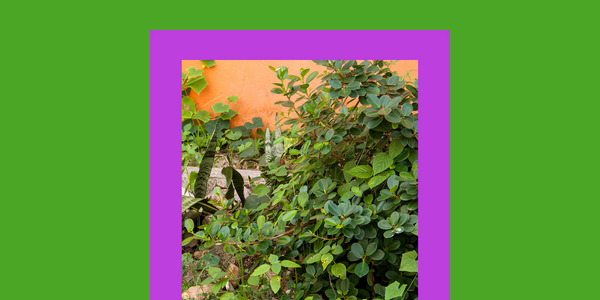
How to Build a Living Fence in Australia
Surging timber costs and rusted wire are symptoms of a fragile supply chain. Why invest in dead barriers that rot when you can grow a biological redoubt? Discover the art of the living wattle fence, an evolving, carbon-sequestering boundary for the Australian landscape.
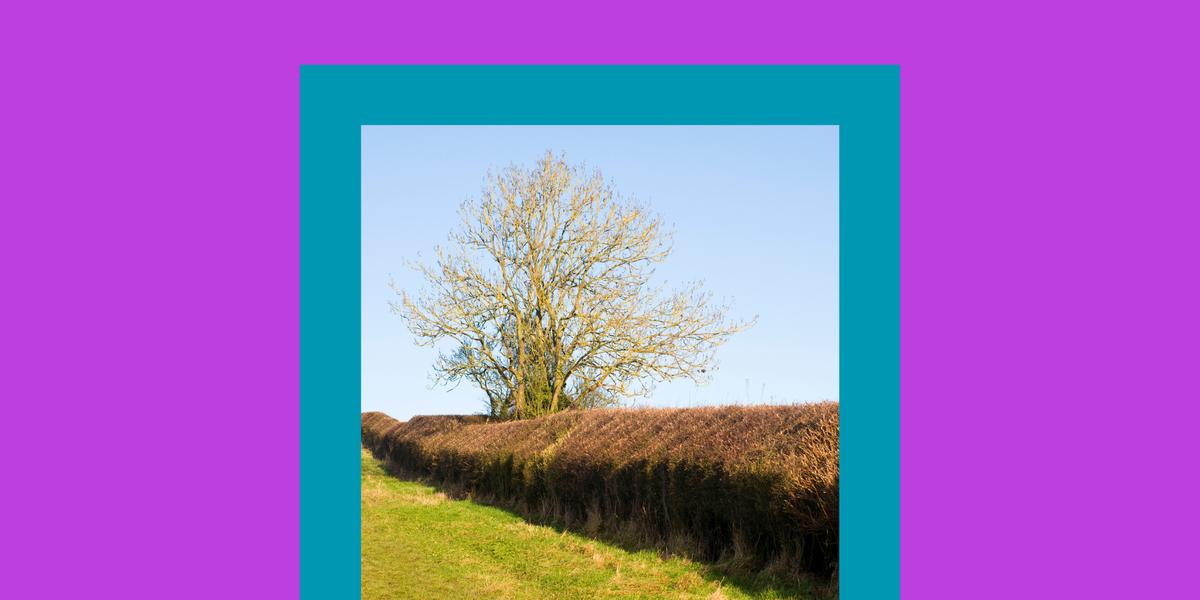
In our current era of material scarcity, the traditional suburban fence, a stark assembly of treated pine or corrugated steel, is increasingly looking like a strategic liability. As I discussed in my briefing on the Dependency Trap, we have been conditioned to rely on industrial outputs for every facet of our domestic security. But while a timber fence begins its journey toward decay the moment it is installed, a living fence does the opposite: it grows and it gains structural integrity with every passing season. By harnessing the biological processes of our Australian flora, we can replace a depreciating asset with a thriving, carbon-sequestering ecosystem.
The Science of Fusion: Inosculation and Resilience
The fundamental brilliance of a living fence lies in a natural phenomenon called inosculation. This is the process where the branches or trunks of trees grow together and fuse into a single, interconnected organism. Historically, this was the "Pleaching" technique used in European estate gardening, but in a modern Australian context, it serves a much more tactical purpose.
According to research published in the Journal of Experimental Botany, the vascular fusion of woody plants allows for the shared distribution of nutrients and water across the entire network. This means that once your fence is fused, it becomes a single, resilient entity. If one section faces a localised pest or water stress, the collective sap flow of the neighbouring plants can sustain the weakened limb. This is not just a fence; it is a collaborative biological network.
The Multi-dimensional Return on Investment
Choosing a living boundary over a dead one provides a suite of returns that no hardware store can offer:
- Climate Mitigation: A study by the CSIRO suggests that strategically planted windbreaks can reduce wind speed by up to 50% for a distance of ten times the height of the fence. For those of us in WA battling the Fremantle Doctor, this is the difference between a scorched vegetable patch and a thriving harvest.
- Biodiversity Reservoirs: As habitat fragmentation increases, your boundary can act as a vital wildlife corridor. Research in Urban Ecosystems highlights that even narrow hedgerows significantly increase the presence of beneficial insects and avian predators, which in turn provides natural pest management for your food crops.
- Carbon and Noise Sequestration: Living plants act as a natural acoustic baffle, absorbing decibels that hard surfaces merely reflect. Simultaneously, they function as a permanent carbon sink, pulling atmospheric CO2 into the soil and timber of your patch.
Selecting Your Plant Palette
To build a successful living fence in Australia, we must choose species that respect our ancient soils and erratic rainfall. Here's an example for those who are in WA.
For Privacy and Dense Screening:
- Swamp Sheoak (Allocasuarina obesa): Remarkably fast-growing and salt-tolerant. Its fine, drooping needles create a dense, "hushing" sound as the wind passes through.
- Flinders Range Wattle (Acacia iteaphylla): A bushy, weeping wattle that provides immediate privacy with minimal water requirements once established.
For Robust Windbreaks:
- River Sheoak (Allocasuarina cunninghamiana): Ideal for larger properties, forming a towering, resilient wall.
- Grass-leaved Hakea (Hakea multilineata): Offers dense filtration and stunning pink blooms, attracting nectar-feeding birds.
For Defensive, Animal-Deterrent Boundaries:
- Prickly Moses (Acacia pulchella): An impenetrable thicket of thorns that discourages unwanted intruders, both four-legged and two-legged.
- Harsh Hakea (Hakea prostrata): Living up to its name with rigid, sharply pointed foliage that creates a formidable barrier.
The Process: Planting and Interlacing
Building a living fence requires a shift in perspective, moving from "installation" to "cultivation."
- Preparation: Clear your line and amend the soil with local compost. While many natives are hardy, giving them a rich start ensures faster fusion.
- Planting Density: For a dense garden screen, plant your saplings at intervals of 20-50 cm. For larger windbreaks, you can stretch this to 100 cm.
- The Interlace: Once the plants have established (usually after one growing season), begin the weaving process. Gently bend flexible branches towards their neighbours, ensuring multiple points of contact.
- Securing the Occlusion: Use a soft, biodegradable twine (like jute) to hold the branches in place. As the stems thicken, they will exert pressure against each other, eventually fusing into a single lattice.
- Pruning for Density: Selective pruning is essential. By "topping" the main stems once they reach your desired height, you encourage the plant to put its energy into lateral growth, filling the gaps in your living wall.
Reclaiming the Boundary
Whether you are defining a suburban plot in Bassendean or securing a paddock in Pemberton, the living fence is a testament to the power of working with nature rather than attempting to dominate it. It is a long-term project, certainly, but it is one that pays dividends in security, beauty, and ecological health for generations.
If you are ready to move beyond the fragile models of modern landscaping and start building real, biological assets, join us in The Resilience Village.
We are a community of over 400 families sharing the practical intelligence required to navigate these changing times with dignity and skill. Within the Village, we swap local plant knowledge, share success stories of our own living infrastructure, and support each other in the great work of reclamation.
Want to learn more about the strategic shift away from consumer dependency? Read my foundational briefing on The Great Unravelling.