Reclaiming Time from the Corporate Machine
Time is the only commodity more valuable than gold, yet we squander it on a system that is actively devouring itself. From the stress of the harvest rush to the artificial pressure of the corporate clock, it's time to re-align with the seasons and reclaim your life's schedule.

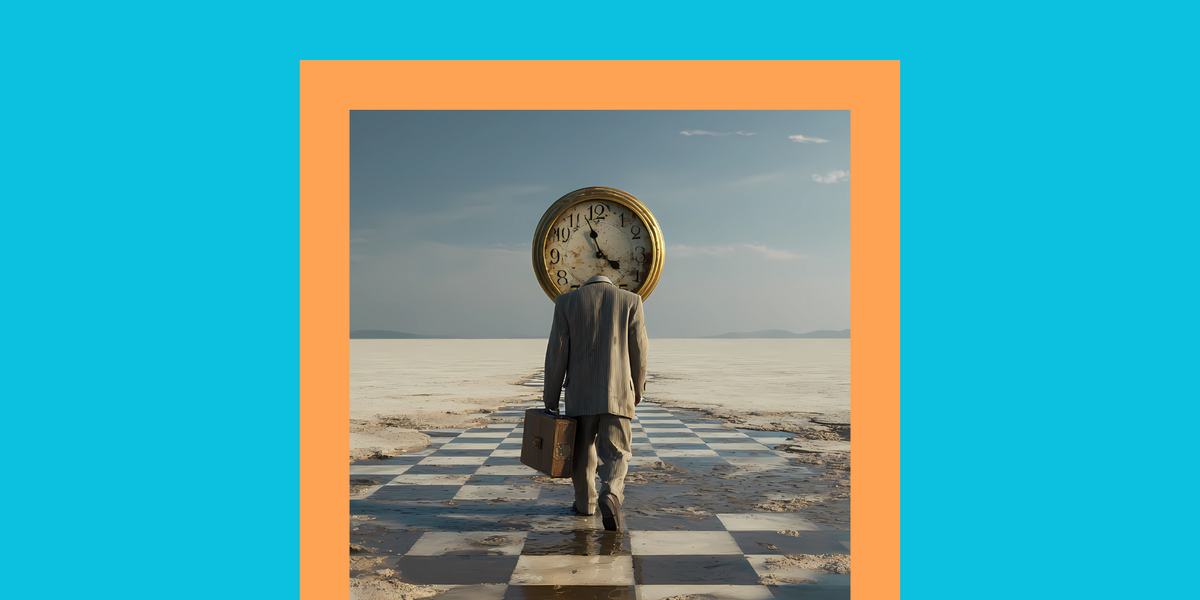
A member of The Resilience Village recently voiced a struggle that resonates with almost everyone attempting to decouple from the modern grid: "Time is still our biggest constraint. We seem to be in the messy middle of breaking free from the system. We get a glut of something we’ve grown, go crazy preserving it, and then find ourselves unable to use it effectively. It’s a constant juggle."
This "messy middle" is where most people falter. It is the friction point between the fast-paced, high-energy world of the consumer and the rhythmic, seasonal world of the producer. In our modern context, time is treated as a luxury or a curse. We are either chasing it or running from it, rarely standing still long enough to understand our relationship with it.
For me, part of breaking free has been a radical reassessment of my relationship to the clock. I feel it in the fear of missing first plantings when the first rains hit and I haven't got seeds in the ground, and I feel it in the frantic energy of the harvest rush. However, I’ve found that the Resilience Operating System (ROS) isn't just about soil and seeds, it is an investment in time that pays a long-term dividend in mental clarity.
The Invention of the Industrial Clock
To understand why we feel so pressured, we must recognise that our modern perception of time is a relatively recent human invention. Nature does not know the Gregorian calendar. The earth moves in cycles of light, temperature, and moisture. Our ancestors lived by these "circadian" and "seasonal" rhythms for millennia.
The transition to the rigid, linear time we use today, marked by the 24-hour clock and the seven-day week, was largely driven by the Industrial Revolution. In the late 18th century, as factories replaced farms, "time" was redefined as a measure of work-life. It became a tool for the management of labour. We moved from the task-orientation of the seasons (harvesting when the crop is ready) to the time-orientation of the factory floor (working from 9 to 5 regardless of the sun).
Success was suddenly charted against the metric of a system that views humans as interchangeable cogs in a corporate machine. Today, we are still living under that shadow, pressured by faceless boards of directors to do more in smaller periods, even as that very system begins its terminal unravelling.
The Solace of the Plan
When I built my own ROS, I found solace in planning. This may sound counter-intuitive, adding more work to a busy schedule, but it is actually an act of reclamation. By mapping out the year, I am no longer reacting to the farm or other systems in my life; I am participating in it.
Planning allows me to measure my time and allocate it where it is most needed. I know when the harvest gluts are coming. I know when the workload will increase because of milking schedules or new babies being born on the patch. By investing time to plan, I ensure I have the tools and the mental space to handle the summer rush (or any other crisis) without the crushing weight of guilt or anxiety.
When you have a structure, a glut of tomatoes isn't a crisis of not enough time; it is a scheduled event you have already prepared for. You have the jars, you have the firewood or the energy, and you have cleared the afternoon. This is how we move from juggling to managing.
The Veil of Truth
We spend so many of our wishes on time. We wish for it to hurry up when we are in pain. We wish for it to slow down when we are trying to capture life's moments. We wish there were more hours in the day to get things done, yet we often wish for less to do.
Time is an eternal commodity that we must value above gold. Often, it takes a traumatic event, a personal Titanic or an existential life crisis, for us to finally lift the veil of truth. In those moments of loss or health scares, the corporate clock stops ticking. You realise that the success defined by your job title is an illusion, but the time spent building a secure, nourished home for your family is the only real wealth and purpose that remains.
Reframing Success in the Unravelling
I am not suggesting that the transition from a consumption-based life to a resilient one is easy. It is hard work. Nor am I saying everyone needs to run off, join a commune, and abandon modern hygiene. That is a binary trap designed to make resilience look unachievable and a narrative to paint a picture of "others".
What I am saying is that there is an Operating System that will work for you, provided you know your purpose and are willing to invest the time to create change. This transition is not about doing more; it is about doing what matters.
Resilience living education should be for everyone, not just those with a surplus of cash. This is why I will always provide a free way to engage in this conversation through this publication: The Resilience Brief and my community: The Resilience Village. Access to community and the basic tools of change should be a human right as we navigate these changing times together.
The Transition Strategy
Some people prefer to go through this change in a self-paced way, learning through trial and error - what I often call the slow-burn of experience. Others find that they need a guide to help them not only find their reason why, but move through the transition in a swift way, avoiding the pitfalls.
Regardless of which path you choose, remember that every minute you spend decoupling from the corporate elite’s version of time is a minute you are reclaiming for your own autonomy. We are moving toward a societal shift unlike anything we have ever seen. In that new world, the man or woman who knows how to work with the seasons will be far wealthier than the one who only knows how to punch a clock.
Time is the only thing we can never get back. Use it to build something that lasts. Grab your hat. We’ve got work to do.
To understand the data behind why we must re-evaluate our systems, read my briefing on The Great Unravelling.
If you are ready to audit your relationship with time and household security, explore your options on The Path.