Syntropic Agroforestry: A Beginner's Guide for Temperate Climates
Beginners Guide to Syntropic Agroforestry for Temperate Australia
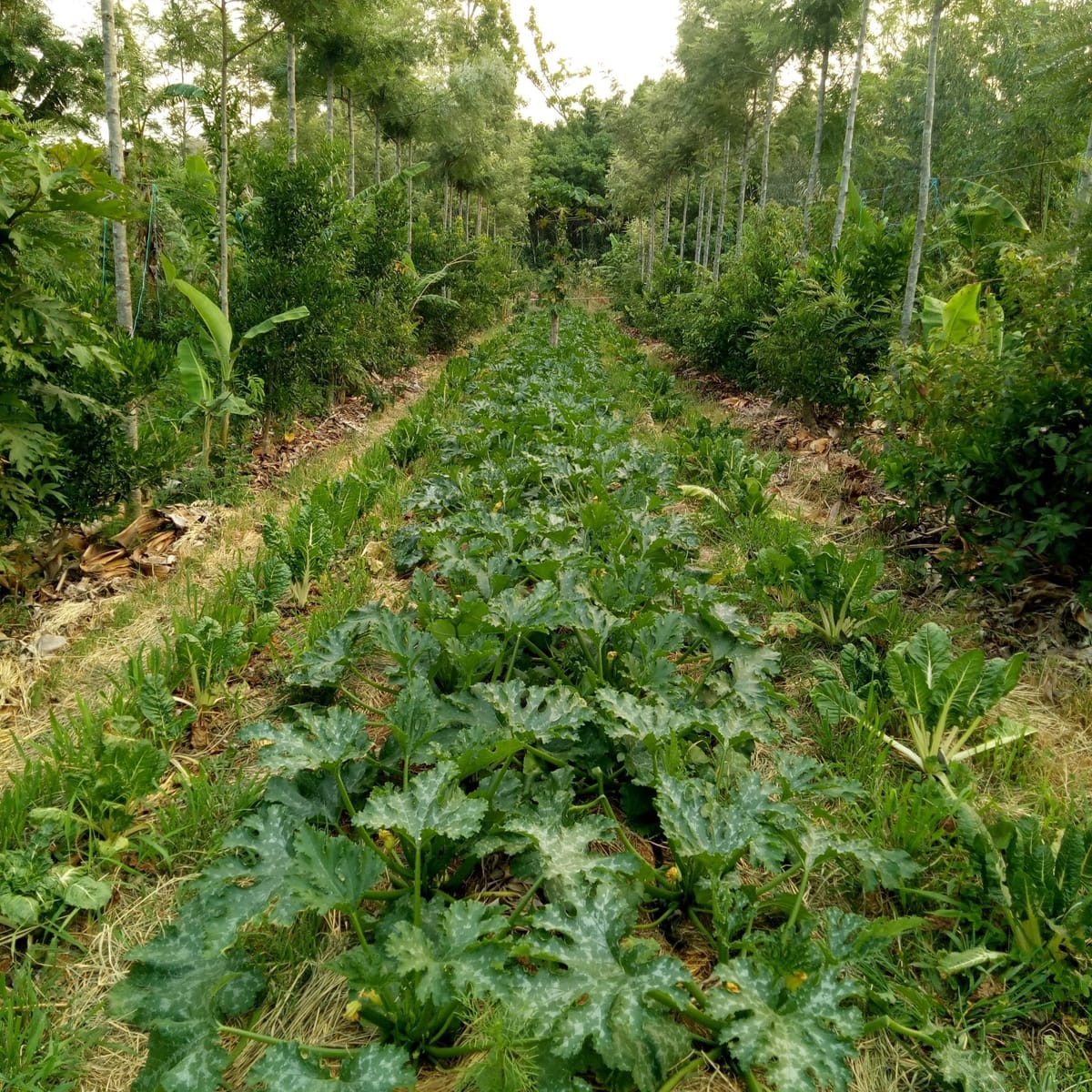
Is Syntropic Agroforestry the Same as a Food Forest?
What is Syntropic Agroforestry?
Syntropic agroforestry is a regenerative farming method that mimics natural forest ecosystems. It's a way to grow food and other crops in a sustainable and productive manner, even in challenging climates like temperate regions with dry summers and wet winters.
Comparing Syntropic Agroforestry to Food Forests
While syntropic agroforestry and food forests share similar goals of creating diverse, productive, and sustainable ecosystems, they have distinct approaches and characteristics.
Syntropic Agroforestry emphasises a more structured and intentional design, focusing on replicating natural succession patterns and optimising plant interactions. It involves careful selection of species, precise planting arrangements, and regular management practices to maintain the system's balance.
Food Forests often take a more naturalistic approach, allowing for spontaneous growth and natural succession. They prioritise biodiversity and resilience, emphasising the creation of a self-sustaining ecosystem with minimal human intervention.
In essence, Syntropic Agroforestry offers a more controlled and managed approach to creating a productive ecosystem, while Food Forests embrace a more hands-off and nature-led approach. Both methods can be effective in achieving sustainable food production and ecological restoration, and the choice between them often depends on the individual's preferences and goals. This is why so many farmers are considering syntropic agroforestry as the regenerative, yet high yield, method of the future.
How Does Syntropic Agroforestry Work?
The key to syntropic agroforestry is to create a diverse and interconnected community of plants. This community, called a consortium, is designed to mimic the natural succession of species in a forest. By planting a variety of trees, shrubs, and other plants together, you can create a self-sustaining ecosystem that requires minimal external inputs.
The Benefits of Syntropic Agroforestry
Increased productivity: Syntropic systems often produce higher yields of crops compared to traditional farming methods.
Improved soil health: The diverse plant community helps to build and maintain healthy soil.
Reduced water use: Syntropic systems can be more drought-resistant than traditional agriculture.
Increased biodiversity: By creating a diverse ecosystem, you can support a wide range of wildlife.
Climate resilience: Syntropic agroforestry systems are more resilient to a changing climate, as they are better able to adapt to changing conditions.
Getting Started with Syntropic Agroforestry in a Temperate Climate
Choose a suitable site:
The first step in establishing a syntropic agroforestry system is to select a well-draining location with ample sunlight exposure. This will ensure that the plants in your consortium have the resources they need to thrive. Avoid areas with waterlogging or heavy shade, as these conditions can hinder plant growth and development. Consider the overall climate and microclimate of your region, taking into account factors such as temperature, rainfall, and wind patterns.
Prepare the soil:
Preparing the soil is essential for creating a healthy foundation for your syntropic agroforestry system. Begin by removing any weeds or debris from the site to prevent competition with your desired plants. Incorporate organic matter, such as compost or well-rotted manure, to improve soil fertility and structure. This will enhance nutrient retention, water infiltration, and overall soil health. Consider conducting a soil test to assess its nutrient content and pH levels, allowing you to tailor your soil preparation accordingly.
Plant a diverse range of species:
One of the core principles of syntropic agroforestry is to establish a diverse community of plants. This diversity promotes ecological resilience, nutrient cycling, and pest and disease resistance. Include a variety of trees, shrubs, and understory plants that are native to your region or well-adapted to your local climate. Consider the successional stages of different plant species, ensuring a balanced representation of pioneers, mid-successional, and climax species. This will create a dynamic and self-sustaining ecosystem. This doesn’t mean install all 4 year old trees, but rather gather a variety of seed and tube stock to get started. Everything is best grown from seed or seedling.
Maintain the system:
Once your syntropic agroforestry system is established, ongoing maintenance is crucial for its long-term success. Regular, timed, pruning of trees and shrubs helps to manage growth, promote branching, and increase light penetration for understory plants. Harvesting crops at the appropriate time will ensure maximum yield and quality. Additionally, monitor the system for signs of pests or diseases, and take appropriate action if necessary. Remember, syntropic agroforestry is a living and evolving system, so be prepared to adapt your management practices as needed.
Key Considerations for Temperate Climates
Drought tolerance:
Given the dry climate in many temperate regions, it's crucial to select plants that are well-adapted to drought conditions. These plants have developed strategies to conserve water, such as deep roots, thick leaves, or waxy cuticles. Examples of drought-tolerant plants include olives, rosemary, lavender, and certain cacti. You may even be able to get away with some sub-tropical plants depending on your location and humidity. Consider the specific rainfall patterns in your area and choose plants that can thrive with limited water availability.
Frost tolerance:
Frost tolerance is another important factor to consider, especially in regions with cold winters. Some plants are more susceptible to frost damage than others. Choose plants that are known to withstand freezing temperatures or that can be protected during harsh weather conditions. Native plants are often well-adapted to the local climate and may exhibit better frost tolerance. Consult local resources (such as Facebook groups or other syntropic agroforestry people) or pioneering consultants (such as Scott Hall or Charles Otway in Australia) for specific recommendations based on your region.
Wind tolerance:
Strong winds can be detrimental to plants, causing physical damage and stress. Select plants that are known to be wind-tolerant, such as those with sturdy stems, deep roots, or flexible branches. Consider the prevailing wind direction in your area and position plants accordingly to provide natural windbreaks or protection. Additionally, you can implement physical windbreaks, like hedges or trellises, to further shield your plants from strong winds.
Common Plant Species for Temperate Climates
Trees
Native Trees:
Eucalyptus species (e.g., Blue Gum, River Red Gum, Peppermint Gum)
Acacia species (e.g., Wattle, Blackwood, Golden Wattle)
Casuarina species (e.g., She Oak, River She Oak)
Melaleuca species (e.g., Tea Tree, Paperbark)
Banksia species (e.g., Banksia serrata, Banksia integrifolia)
Callistemon species (e.g., Bottlebrush)
Grevillea species (e.g., Silky Oak, Spider Flower)
Corymbia species (e.g., Bloodwood, Ghost Gum)
Exotic Trees:
Olive (Olea europaea)
Fig (Ficus carica)
Citrus species (e.g., Lemon, Orange, Mandarin)
Pomegranate (Punica granatum)
Persimmon (Diospyros kaki)
Avocado (Persea americana)
Almond (Prunus dulcis)
Walnut (Juglans regia)
Chestnut (Castanea sativa)
Shrubs
Native Shrubs:
Acacia species (e.g., Golden Wattle, Prickly Moses)
Grevillea species (e.g., Spider Flower, Honey Myrtle)
Callistemon species (e.g., Bottlebrush)
Melaleuca species (e.g., Tea Tree, Paperbark)
Banksia species (e.g., Banksia serrata, Banksia integrifolia)
Kunzea species (e.g., Crimson Bottlebrush)
Correa species (e.g., Correa speciosa)
Hibbertia species (e.g., Guinea Flower)
Exotic Shrubs:
Rosemary (Rosmarinus officinalis)
Lavender (Lavandula angustifolia)
Elderberry (Sambucus nigra)
Blueberry (Vaccinium corymbosum)
Raspberry (Rubus idaeus)
Currant (Ribes spp.)
Gooseberry (Ribes uva-crispa)
Chokeberry (Aronia melanocarpa)
Herbs
Native Herbs:
Thysanotus tuberosus (Common Fringe-lily)
Goodenia ovata (Hop Bush)
Pimelea species (e.g., Flax-leaf Flaxlily)
Boronia species (e.g., Lemon Myrtle)
Exotic Herbs:
Basil (Ocimum basilicum)
Parsley (Petroselinum crispum)
Sage (Salvia officinalis)
Marjoram (Origanum majorana)
Dill (Anethum graveolens)
Fennel (Foeniculum vulgare)
Coriander (Coriandrum sativum)
Mint (Mentha spp.)
Oregano (Origanum vulgare)
Thyme (Thymus vulgaris)
Vegetables
Native Vegetables:
Warrigal Greens (Centella asiatica)
Geraldton Wax (Cerinthe major)
Quandong (Santalum acuminatum)
Bunya Nut (Araucaria bidwillii)
Sea Celery (Apium graveolens var. dulce)
Exotic Vegetables:
Tomatoes (Solanum lycopersicum)
Peppers (Capsicum annuum)
Pumpkins (Cucurbita spp.)
Beans (Phaseolus vulgaris)
Corn (Zea mays)
Carrots (Daucus carota)
Lettuce (Lactuca sativa)
Spinach (Spinacia oleracea)
Broccoli (Brassica oleracea var. italica)
Cauliflower (Brassica oleracea var. botrytis)
This list provides a diverse range of plant options for Syntropic Agroforestry in temperate climates. Remember to consider factors such as climate, soil conditions, and personal preferences when selecting plants for your specific system. If you are opting for using a syntropic agroforestry system on a homestead, instead of a food forest, then you really need to grow what you and your family like to eat (as you’ll have a lot of it!). If you are growing to feed the masses, then consider the market for your target species.
Conclusion
Syntropic agroforestry offers a sustainable and productive approach to farming in temperate climates. By carefully selecting plant species, creating diverse consortiums, and managing the system effectively, you can establish a resilient and self-sustaining ecosystem. The benefits of syntropic agroforestry include increased yields, improved soil health, reduced water use, enhanced biodiversity, and greater climate resilience. By incorporating a variety of native and exotic plants, you can create a unique and thriving agroforestry system that supports both ecological and economic goals. Remember to consider the specific characteristics of your region, such as climate, soil conditions, and plant availability, when designing your own syntropic system. With careful planning and implementation, you can reap the rewards of this sustainable and regenerative farming method on any scale.